

Prepare: Setting the conditions for successful learning

xUnlocked
One of the most important phases of any learning journey happens before the first lesson begins. Real capability is built by diagnosing the gaps, designing learning around real work, and setting the conditions for people to engage with purpose.
There is a common misconception in organisational learning that success begins at launch.
The platform goes live. Invitations are sent. The first modules are completed. Engagement data begins to appear. And from there, the hope is that learning will somehow compound, turning participation into capability, and capability into meaningful business change.
Sometimes it does. But more often than organisations would like to admit, it doesn’t.
The learning may lack quality. Or perhaps internal cultural issues make employees unwilling to engage for long. More often, however, the conditions for success were never properly established.
At xUnlocked, we believe one of the most important phases of any learning journey happens before the first lesson begins.
Long before expertise is shared, before behaviours begin to shift, organisations make a series of choices that determine whether learning will merely be delivered, or will genuinely change how people think, decide and perform.
That is what we mean by Prepare.
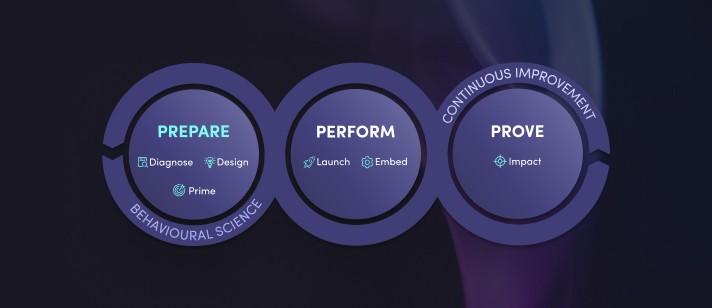
The right preparation is where effective learning begins. It means doing three things well: diagnosing the capability gaps that matter; designing learning around real work; and priming people to engage with purpose.
Too often, organisations move too quickly to solutions. A new learning programme is commissioned in response to market disruption, regulatory pressure or a recognised skills challenge. Content is sourced. Platforms are configured. Communications are drafted.
Yet one critical question remains unanswered: what, precisely, needs to change? Before organisations can build capability, they must first diagnose where capability is absent.
- Where are the gaps that expose the business to risk?
- Which areas of knowledge are becoming strategically urgent?
- What decisions are people being asked to make without the confidence, fluency or judgement they need to make them well?
For some, that challenge may be financial services capability: ensuring that teams across functions understand the financial, risk and compliance dynamics behind better commercial performance, stronger regulatory resilience and lasting reputational trust.
For others, it may be sustainability, where new expectations are demanding enterprise-wide fluency rather than specialist expertise. Increasingly, it is artificial intelligence (AI), where organisations are being forced to confront not only technical understanding, but also readiness to adapt.
Whatever the domain, the principle is the same. Learning must begin with clarity. Diagnosis creates focus. It shifts learning from a reactive intervention to a strategic capability response.
But understanding what needs to change is only the first step. The next is to design learning that feels inseparable from the work itself.
Learning by design
This is where many organisations struggle. Learning is often treated as something adjacent to performance — important, but separate. Too often, it remains abstract: technically sound, but disconnected from the realities of professional decision-making.
Information alone does not create capability. Capability emerges when people can connect what they are learning to the different situations they face, the decisions they make, and the challenges they are expected to navigate.
That is why trusted expertise matters. When learning is shaped and delivered by practitioners — people who have operated in the environments learners themselves are navigating — it carries a different kind of authority. It feels relevant immediately. It builds confidence. It makes application possible.
We saw this clearly in our recent work with a global investment bank that sought to strengthen capability across two fronts simultaneously: maintaining excellence in core financial knowledge while embedding sustainability fluency across an international workforce.
The challenge was not simply scale, but relevance.
A single learning intervention would not suffice for analysts, apprentices and experienced front-office professionals facing different pressures and expectations. What was needed was a carefully designed ecosystem — one that integrated learning from the earliest stages of onboarding, aligned pathways to role and career stage, and connected development directly to professional growth.
The results were compelling: high engagement, sustained participation, and measurable capability gains.
But even the most carefully diagnosed need, and the most thoughtfully designed experience, can fail without one final condition. People must be ready to learn.
This may be the most underestimated element of all. And it is often the one that determines whether learning translates into action.
At xUnlocked, we call this priming.
Priming is the work of creating psychological and cultural readiness. It ensures people understand not only what they are being asked to learn, but why it matters, why it matters now, and what it will enable them to do differently.
It requires visible leadership commitment. It requires managers who model curiosity and continuous development. It requires organisations to position learning not as a compliance exercise, but as a catalyst for growth.
Without that mindset shift, even exceptional learning can feel optional. With it, learning becomes part of how work gets done.
Without that mindset shift, even exceptional learning can feel optional. With it, learning becomes part of how work gets done. A similar principle shaped our work with a top-tier global Corporate & Investment Bank (CIB), where we deployed an early-careers learning programme. Highly capable graduates and interns joined the bank with strong academic foundations, but lacked the confidence to apply their knowledge in unfamiliar, live commercial environments.
By reframing learning as a tool for confidence and contribution — something that would help new joiners engage more effectively, ask better questions and create value sooner — the organisation transformed the way learning was delivered:
- Learning content was targeted and mapped directly to the desks the graduates were sitting on.
- It was easier to measure learning against agreed outcomes, implementing a rigorous pre- and post-learning data strategy to track confidence levels.
- The bank was able to position learning as a tool for on-the-job success, not a compliance hoop to jump through.
The results included an 88% voluntary uptake for the learning programme, a figure far exceeding mandatory requirements, and a 93% test pass rate, demonstrating true mastery, not just attendance.
Prepare in this context didn’t mean administration, logistics, or launch planning. It was the deliberate act of setting the right conditions for expertise to take root:
- Diagnose where capability matters most
- Design learning that people can trust and apply
- Prime individuals and organisations to engage with purpose
Only then can trusted expertise become genuine capability. And only genuine capability can drive meaningful change.
Too often, organisations ask: What should our people learn?
But you should be asking: Have you created the right conditions for learning to succeed?

xUnlocked
Share "Prepare: Setting the conditions for successful learning" on
Latest Insights



Six steps to identifying the capability gaps holding your business back
26th June 2026 • xUnlocked

The EU AI Act: what it means for your business (and how to actually prepare)
16th July 2026 • Learning Adviser